
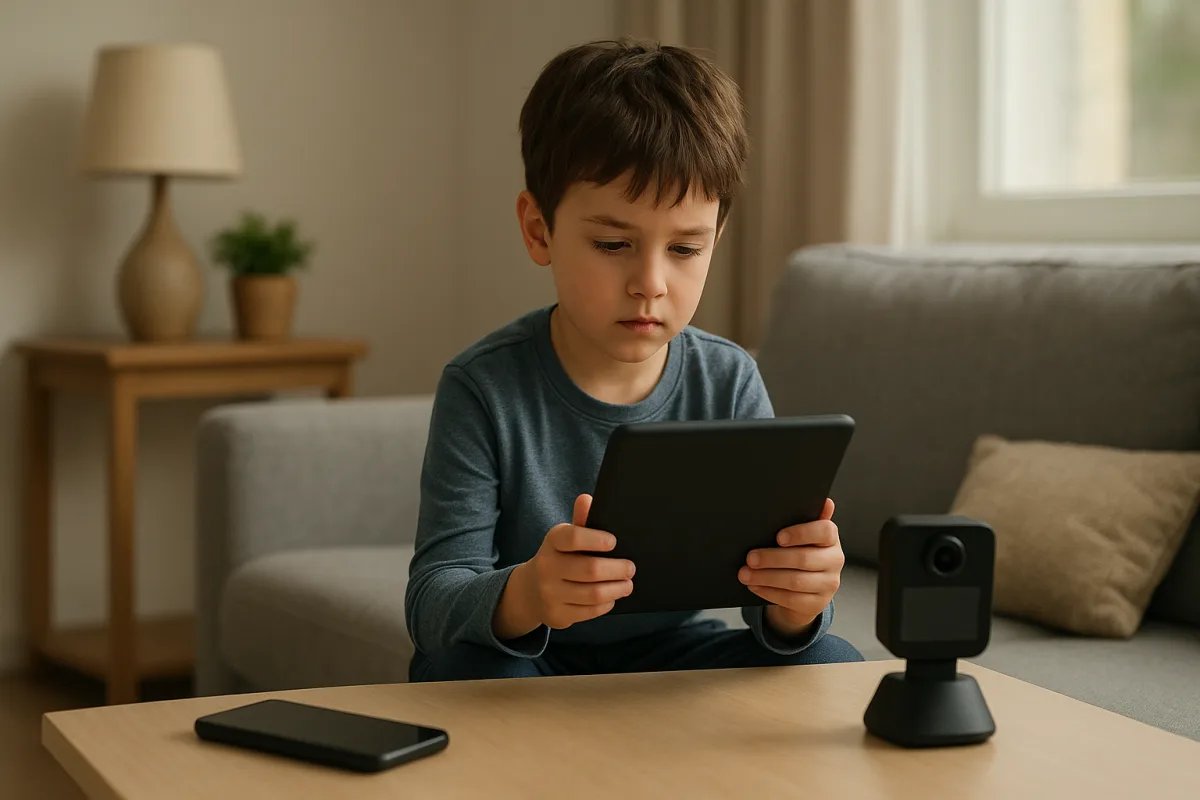
What do age-based screen time limits say?
One of the biggest questions parents ask is about children’s screen time. But experts stress that screens should not be measured only in minutes; a child’s sleep routine, physical activity and daily habits also matter.
The World Health Organization addresses screen use under the heading of “sedentary screen time” in its April 24, 2019 guidance for children under 5. This definition includes watching television or videos and playing computer games. According to the guidance:
- No screen time is recommended for babies under 1 year old.
- Sedentary screen time is also not recommended for 1-year-olds.
- For 2-year-olds, sedentary screen time should not exceed 1 hour.
- For children aged 3 to 4, the upper limit is also 1 hour, and less is better.
The American Academy of Pediatrics recommends avoiding digital media for children under 18-24 months, except for video calls. For ages 2 to 5, the advice is to limit use to 1 hour a day of high-quality content and to encourage parents to watch together.
Why are video calls treated differently?
Video calls are not considered in the same category as passive screen viewing. The main reason is that children interact in both directions, respond to voices and facial expressions, and maintain social connection. Even so, what matters here is using video calls in a way that does not disrupt a child’s daily routine.
Why do content, sleep and movement matter as much as time?
The WHO screen time recommendation treats screens as only one part of a child’s 24-hour day. In other words, the issue is not just how long a child watches, but when they watch, what they watch and what that time takes away from sleep and movement.
Children’s sleep routines can be especially affected by screen use in the evening. Screens can make it harder to fall asleep, and games or fast-paced content can also make it more difficult for children to wind down. Likewise, long periods of inactivity can reduce physical activity during the day.
Why are co-viewing and content selection so important?
When discussing the risk of screen addiction, focusing only on time can be incomplete. Age-appropriate, slower-paced and educational content, combined with co-viewing, can help children make sense of what they see. When parents ask questions, explain things and connect what is on the screen to real life, passive viewing can become a more interactive experience.
How should home rules and a family media plan be set up?
Experts favor predictable rules over sudden bans. From the perspective of digital parenting, one of the most effective steps is to create a simple household routine that everyone understands.
- Set the bedroom as a screen-free space
- Keep the dining table screen-free
- Remove screens from the bedtime routine
- Base content choices on age appropriateness
- Do not use screens as a reward or punishment
What steps can be followed when creating a family media plan?
A personal plan can be created based on the family’s daily schedule, the child’s age and caregiving arrangements. The plan can clearly state when screens may be used, which content is allowed and when a parent will join in.
How should a child’s reaction be handled when screen time ends?
If transitions are announced in advance rather than cut off suddenly, resistance may decrease. It can also help to offer a clear alternative once the screen turns off: a book, free play, a short walk or a conversation together. With consistency, the rules can gradually stop becoming a subject of negotiation.
"""





Comments (0)
No comments yet. Be the first to comment.
Write a Comment