
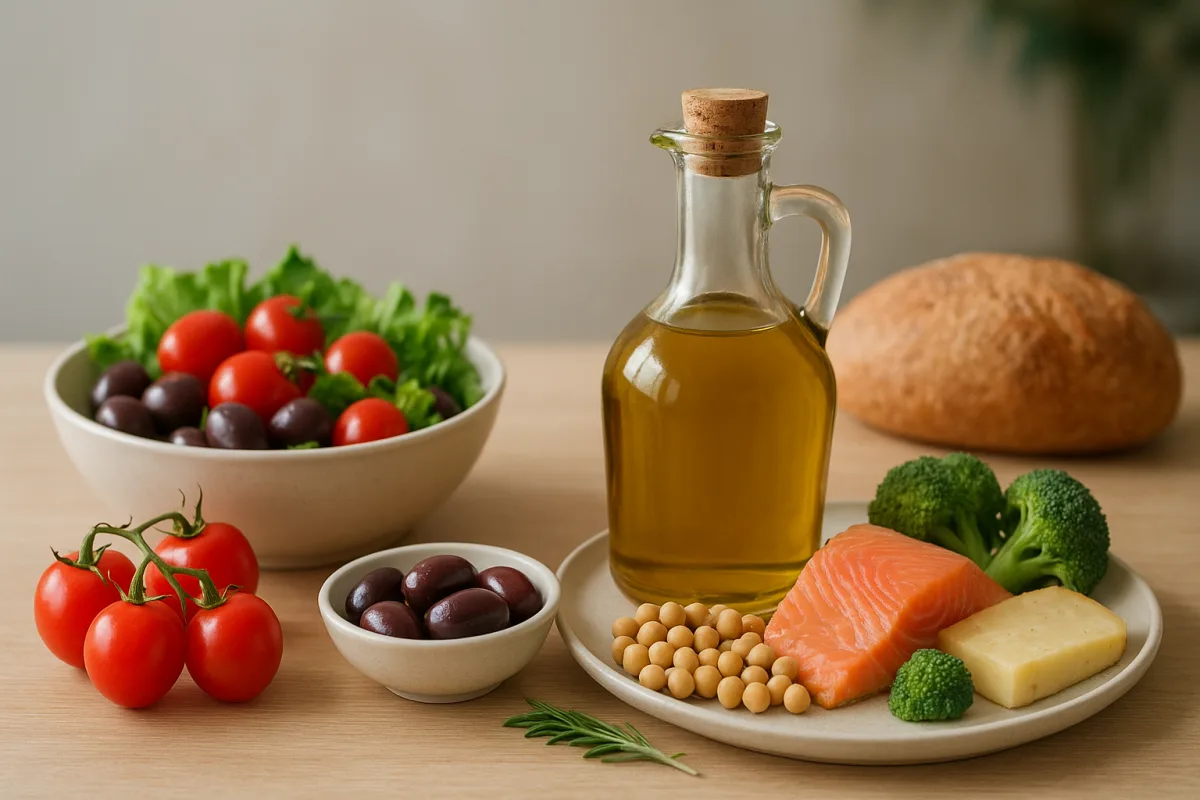
What are the main features that make the Mediterranean diet stand out?
The Mediterranean diet is viewed less as a rigid program built around banned foods and more as a sustainable way of eating over the long term. Key reasons it is studied so often include its adaptability to everyday life, its emphasis on unprocessed foods and its frequent mention in discussions of heart-healthy eating.
When people refer to Mediterranean-style eating, the core framework usually centers on these points:
- Using olive oil as the main source of fat
- Including plenty of vegetables, fruit, legumes and whole grains
- Eating fish more often and red meat less often
- Maintaining variety with nuts, herbs and seasonal produce
This approach focuses not just on individual foods, but on the overall eating pattern. That is why topics such as the benefits of olive oil or vegetable intake are often discussed within the wider dietary pattern, rather than on their own.
Why is the PREDIMED study mentioned so often?
The PREDIMED study was carried out in Spain with 7,447 participants aged 55 to 80 who were at high risk of cardiovascular disease but had not yet developed it. Published in the New England Journal of Medicine in 2013, the study became one of the key pieces of research strengthening the Mediterranean diet’s place in scientific debate.
In the intervention groups, participants followed a Mediterranean diet supplemented with extra-virgin olive oil or nuts. An interim analysis found an approximately 30% relative risk reduction in the primary composite endpoint — heart attack, stroke or cardiovascular death — in the two Mediterranean diet groups, and the study was stopped early after a median 4.8 years of follow-up.
What did it mean that the study was withdrawn and republished in 2018?
The study was withdrawn in 2018 because of a problem in the randomization process, then reanalyzed and published again in the same journal. The crucial point is that the methodological issue was corrected transparently, while the overall direction of the main finding remained similar. That does not mean the research is beyond debate, but it does show why transparency matters in science.
Is one study enough, and how close is Turkish cuisine to this model?
In nutrition science, one study is generally not considered enough to settle the question. The strongest assessment comes from looking at intervention trials, observational data, biological mechanisms and real-world practicality together. That is why PREDIMED is an important piece in debates about a healthy eating model, but not the final word on its own.
Why is UNESCO recognition important?
UNESCO added the Mediterranean diet to the Representative List of the Intangible Cultural Heritage of Humanity in 2010. This listing shows that the model is linked not only to health, but also to a culture of sharing, seasonality, local production and a broader way of life around the table.
Shared points with Turkish cuisine, and where they differ
- Olive oil-based dishes, legumes, seasonal vegetables and fish consumption in some regions are closely aligned with this model.
- Whole grains, herbs and simple homemade dishes can also fit the Mediterranean-style eating approach.
- On the other hand, highly processed foods, frequent red meat consumption and sugary choices can move eating habits away from this framework.
For that reason, the Mediterranean diet is so widely studied not just because it is popular, but because it is both scientifically well examined and culturally rooted.
"""





Comments (0)
No comments yet. Be the first to comment.
Write a Comment