
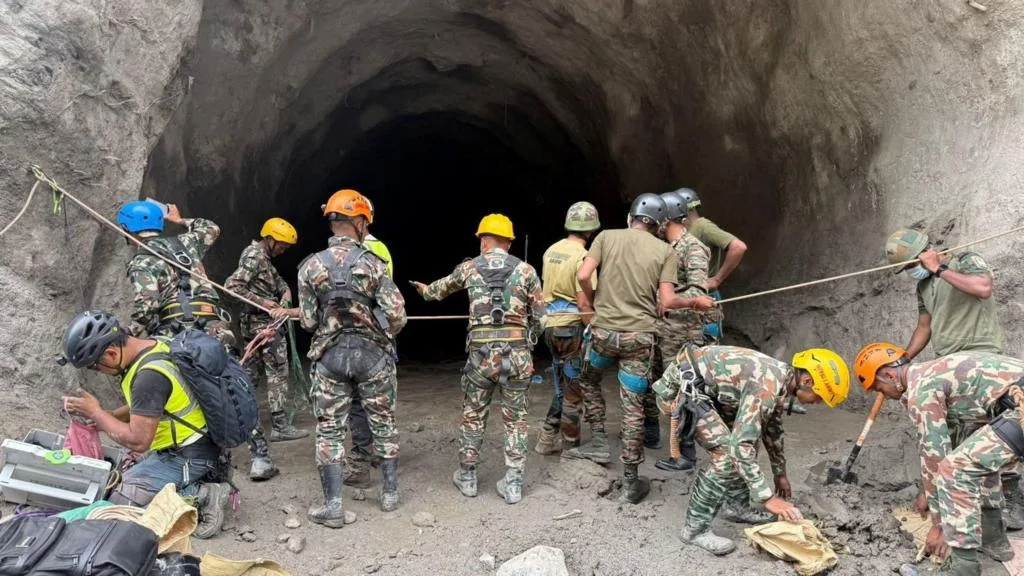
Course contre la montre sur les rives de la rivière Trishuli
Les recherches se sont poursuivies lundi pour tenter d’atteindre les employés du secteur hydroélectrique que l’on pense piégés dans un réseau de tunnels noyés de boue le long de la rivière Trishuli, après la catastrophe provoquée par les inondations au Népal. Les équipes de secours tentent de gagner l’accès aux passages souterrains en procédant à des explosions contrôlées sur la pente et en y injectant de l’air, dans l’espoir de localiser d’éventuels survivants.
Les familles estiment que l’opération aurait dû commencer plus tôt, en particulier l’injection d’air lancée ce week-end, et soulignent que la marge de manœuvre se réduit d’heure en heure. Selon les autorités, environ un septième des disparus sont des travailleurs des sites hydroélectriques; les familles, elles, pensent que plus de 600 employés pourraient être coincés dans les tunnels.
- Des explosifs sont utilisés sur la pente pour faciliter les secours.
- De l’air est pompé dans les tunnels afin d’y maintenir de l’oxygène.
- Les équipes tentent de localiser à nouveau les conduites souterraines.
Que disent les chiffres officiels ?
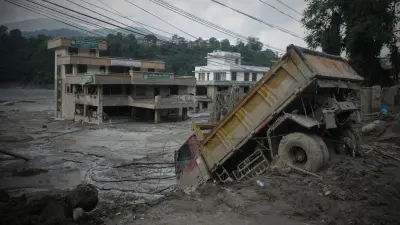
L’autorité népalaise de gestion des catastrophes a indiqué que le bilan des inondations à la frontière entre le Népal et le Tibet est monté à 939 morts, tandis que le nombre de disparus a été révisé à 3.925. Parmi eux figureraient 592 ressortissants étrangers.
Le dirigeant népalais Balendra Shah a annoncé que 279 personnes avaient jusqu’à présent été secourues dans les sites hydroélectriques. Il a également précisé que 11.379 personnes au total avaient été évacuées dans les zones touchées par les inondations à travers le pays.
Les équipes internationales sur le terrain, l’accès aux tunnels se complique
L’opération est menée par une équipe composée de soldats chinois et népalais. Des spécialistes venus d’Inde, de Corée et d’Australie apportent aussi leur soutien aux travaux.
Lundi, l’un des groupes a réussi à entrer dans un tunnel menant à l’une des centrales hydroélectriques; n’y trouvant personne, il s’est replié. Arnold Dix, l’ingénieur australien qui aide à distance les recherches souterraines, a expliqué que le paysage était devenu méconnaissable après les inondations, que certains blocs étaient plus grands que des maisons et qu’il était donc extrêmement difficile de repérer l’emplacement des tunnels.
Les dégâts s’aggravent dans les projets hydroélectriques
Le Népal dépend largement de l’hydroélectricité pour produire son énergie et développe depuis des années de nouveaux projets sur ses rivières de montagne. Les autorités ont indiqué qu’au moins 11 projets, achevés ou en cours de construction, avaient été endommagés par les inondations.
Inhumations provisoires à Chitwan, accès à l’information limité au Tibet
Près de 300 corps emportés vers l’aval par les eaux ont été retrouvés sur les berges dans la région de Chitwan. Des prélèvements ADN sont effectués pour identifier les dépouilles, tandis que des inhumations provisoires ont été décidées faute de réfrigération suffisante, a-t-on indiqué.
Du côté tibétain, les médias d’État chinois ont fait état de 16 morts et de 546 disparus. Les images liées aux inondations auraient été fortement censurées en Chine, et certaines personnes qui avancent que les chiffres officiels pourraient être plus élevés auraient fait l’objet de sanctions administratives. Les autorités népalaises ont également demandé le retrait de contenus qu’elles considèrent comme de la désinformation en ligne.
"""

Commentaires (0)
Aucun commentaire. Soyez le premier.
Écrire un commentaire
Yorum yazmak için giriş yapın. Üyelik ücretsiz; yorumunuz editör onayından sonra yayımlanır.