
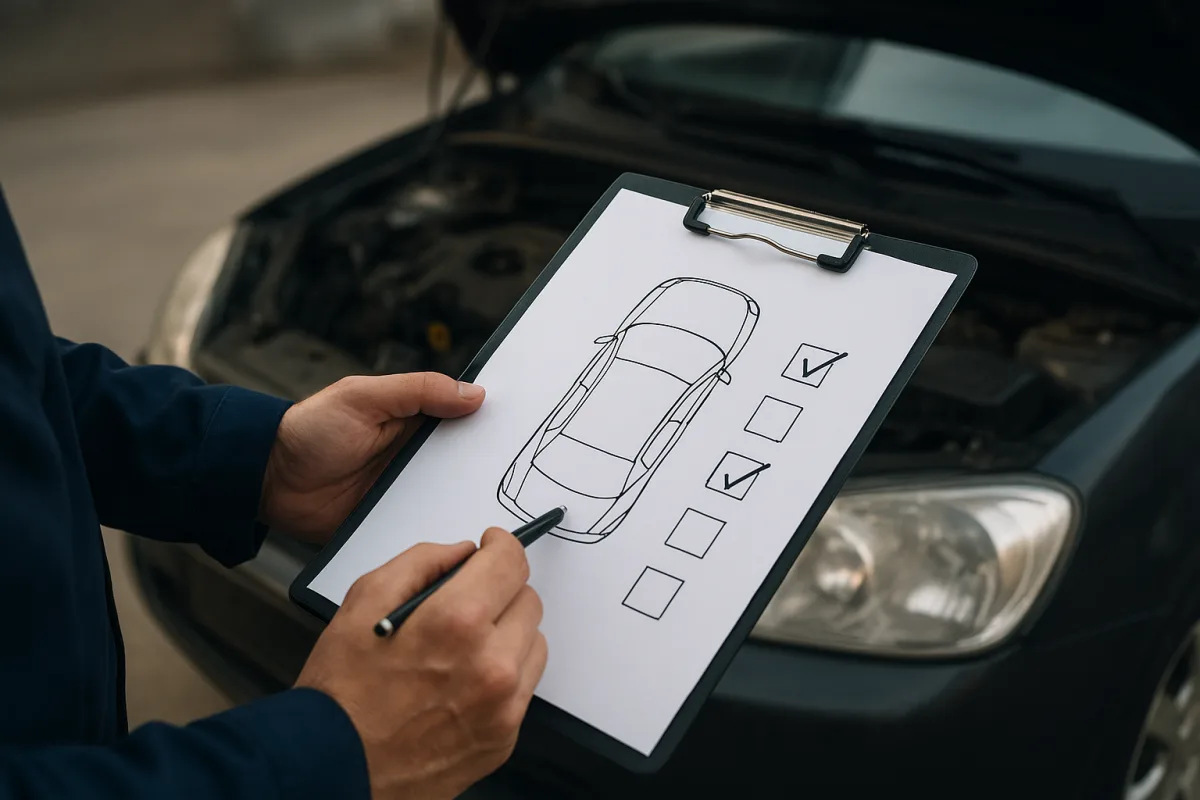
Pourquoi le rapport d’expertise est-il déterminant ?
Le processus d’expertise d’un véhicule d’occasion est important pour repérer non seulement les défauts actuels, mais aussi les traces de dommages ou d’usure survenus par le passé. Le rapport doit donc être examiné en même temps que l’essai routier, les carnets d’entretien et les informations de la carte grise.
Lorsqu’on lit un rapport d’expertise, il ne faut pas se focaliser sur une seule ligne, mais sur l’ensemble du tableau. En particulier, si les constats concernant la carrosserie, le châssis, le moteur, les éléments roulants et les systèmes électroniques se contredisent, il convient de reconsidérer la décision d’achat.
Que faut-il rechercher dans la carrosserie et le châssis ?
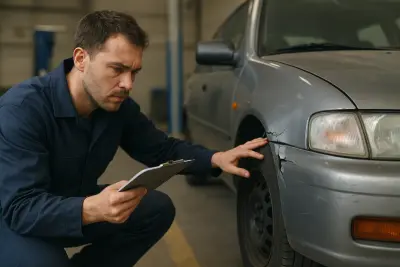
Dans la partie carrosserie, il faut examiner attentivement les mentions de peinture, de retouche localisée, de démontage-remontage de pièces et de remplacement. Mais il ne suffit pas de regarder les interventions de surface ; l’essentiel est de savoir si le choc a atteint des zones porteuses.
Des notes de redressage ou d’intervention sur le châssis, les montants, les longerons, le pavillon et les bas de caisse peuvent indiquer que le véhicule a subi un impact sérieux par le passé. Si de telles mentions existent, il faut aussi s’interroger sur la qualité de la réparation et sur ses conséquences éventuelles pour la sécurité routière.
Comment interpréter les contrôles moteur et mécaniques ?
Dans la rubrique moteur, les points saillants sont les fuites d’huile, les souffles, le système de refroidissement, l’état du turbo, la transmission et les éléments de freinage. À ce stade, il est important de distinguer un simple besoin d’entretien d’un problème mécanique susceptible d’entraîner de lourdes dépenses plus tard.
La suspension, le réglage du train roulant, les disques de frein et l’usure des pneus peuvent aussi donner des indications sur la manière dont le véhicule a été utilisé. Une usure irrégulière ne signale pas seulement un problème de pneus ; elle peut aussi révéler un défaut de train avant, de géométrie ou un ancien choc.
La vérification des éléments repeints ou remplacés suffit-elle ?
La vérification des éléments repeints ou remplacés fait partie des premiers points consultés lors de l’achat d’une voiture d’occasion, mais elle ne suffit pas à elle seule pour décider. Il arrive qu’un véhicule sans trace de peinture présente une fatigue mécanique importante, tandis que certaines interventions esthétiques n’ont pas d’incidence critique sur la sécurité.
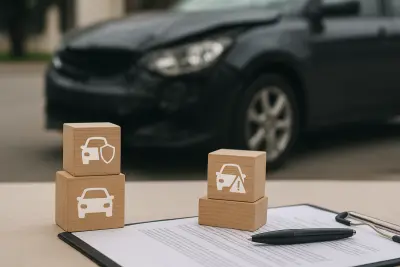
C’est pourquoi les résultats de recherche des dommages doivent être cohérents avec les constats de l’expertise. Si l’état des airbags, des équipements de sécurité, des voyants électroniques ou du kilométrage semble suspect, l’acheteur doit demander un contrôle plus approfondi.
Pourquoi l’électronique et les systèmes de sécurité sont-ils importants ?
Sur les véhicules modernes, les capteurs, les aides à la conduite, la climatisation, le système multimédia et les pannes du tableau de bord peuvent générer des coûts après l’achat. Si un diagnostic électronique a été réalisé dans le rapport, il faut aussi demander si les alertes apparemment disparues sont liées à un historique de panne effacé.
Liste de contrôle finale avant l’achat
Même si le rapport d’expertise semble favorable, il faut compléter les vérifications de base avant de prendre la décision finale. En particulier, les documents et l’historique d’utilisation peuvent être aussi déterminants que le rapport technique.
- Vérifiez la concordance entre les informations de la carte grise et les identifiants visibles sur le véhicule.
- Demandez les factures d’entretien, l’historique du réseau de réparation et, s’il existe, les anciens rapports de réparation.
- Évaluez le véhicule lors d’un court essai routier sur différents types de routes.
- Si les interventions de carrosserie contredisent les constats mécaniques, demandez une expertise complémentaire.
En définitive, dans une bonne démarche d’achat d’un véhicule, l’objectif n’est pas seulement de choisir une voiture bon marché ou qui paraît propre, mais de trouver un modèle qui a peu de chances de réserver de mauvaises surprises à l’avenir. Lire le rapport d’expertise dans sa globalité est l’une des protections les plus importantes lors de l’achat d’une voiture d’occasion.
"""
Commentaires (0)
Aucun commentaire. Soyez le premier.
Écrire un commentaire
Yorum yazmak için giriş yapın. Üyelik ücretsiz; yorumunuz editör onayından sonra yayımlanır.