
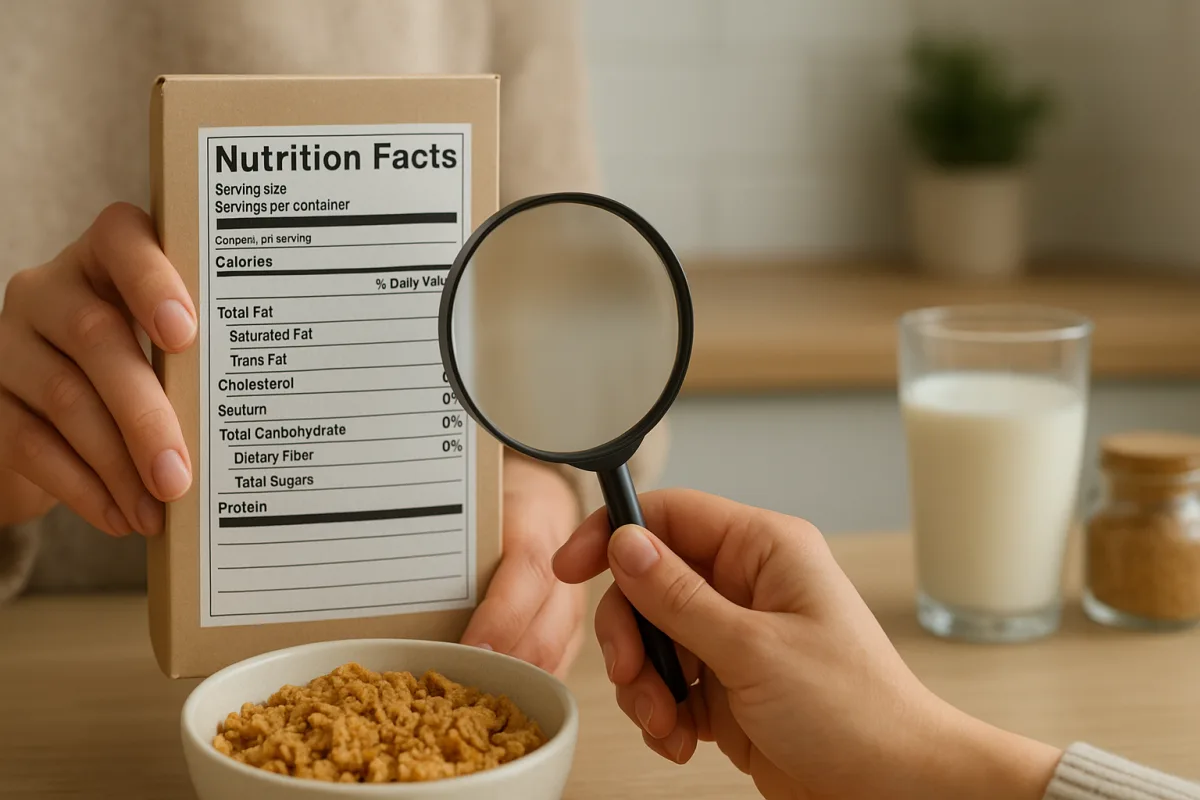
Почему важно читать этикетку продукта?
При оценке упакованного продукта нужно смотреть не на обещания на лицевой стороне, а на таблицу с обратной стороны. Привычка читать этикетку продуктов помогает проще сравнивать похожие товары с точки зрения пользы; в центре внимания здесь — таблица пищевой ценности и список ингредиентов.
То, что написано на этикетке, показывает не только калорийность продукта, но и его нагрузку по сахару, жирам и соли. Эти строки сами по себе не делят продукты на «запрещённые» и «разрешённые», но дают понятную подсказку о том, что можно выбирать чаще, а что — реже в повседневном рационе.
С чего начинать чтение таблицы пищевой ценности?
Порция и фиксированная мера — не одно и то же
На этикетках обычно есть два способа чтения: порция, которую указывает производитель, и фиксированная мера для сравнения. Порция показывает объём потребления, рекомендованный компанией, выпускающей продукт; фиксированная мера помогает сравнивать товары между собой. Поэтому две печенья и одна миска хлопьев не читаются по одной и той же логике: сначала важно понять, сколько вы действительно съедите.
Одна строка может ввести в заблуждение
Даже если у продукта низкая энергетическая ценность, строка с сахаром или солью может оказаться высокой. И наоборот, в продукте с более высокой калорийностью может быть больше клетчатки, белка или более простой состав, и это станет причиной выбрать его. При чтении этикетки лучше не зацикливаться на одной цифре, а оценивать всю таблицу целиком.
На что смотреть в строке с сахаром?
Добавленный сахар может называться по-разному
Показатель сахара в строке углеводов важен, но главный ориентир часто спрятан в разделе состав. Добавленный сахар может быть внесён для вкуса, консистенции или срока хранения и на упаковке не всегда обозначается только словом «сахар».
- Такие формулировки, как глюкозный сироп, фруктозный сироп, декстроза, мальтоза, могут указывать на производные сахара.
- Мёд, патока, концентрированный фруктовый сок и похожие подсластители тоже могут повышать общую сладость продукта.
Сахар всасывается в тонком кишечнике и поступает в кровь, после чего используется организмом как источник энергии. Поэтому, если смотреть на все источники сладости вместе, оценка становится более реалистичной — особенно для тех, кто в течение дня ест несколько упакованных продуктов.
Что рассказывают строки с жирами и солью?
Строка насыщенные жиры важна для понимания типа жира. Жиры необходимы для структуры клеток, выработки гормонов и получения энергии; однако источник жира и общий баланс в продукте напрямую влияют на выбор. Поэтому стоит спрашивать не только «есть ли жир», но и «какой именно жир преобладает».
- Строка соль помогает примерно понять нагрузку по натрию, связанную с водным балансом и передачей нервных импульсов.
- Особенно в снеках, соусах и колбасных изделиях количество соли может быть выше ожидаемого, поэтому смотреть на эту строку нужно даже в сладких продуктах.
Продукт может быть с низким содержанием сахара, но при этом очень солёным; точно так же вариант с низким содержанием жира может содержать много добавленного сахара. Цель чтения этикетки — увидеть не один показатель, а весь состав продукта.
Как читать список ингредиентов и надписи на упаковке?
Ингредиенты перечисляются по убыванию количества
Состав на упаковке пишется от компонента, которого больше всего, к тому, которого меньше. Поэтому то, какой ингредиент стоит первым — мука, сахар, масло или что-то другое, — даёт сильную подсказку о том, на чём построен продукт. Короткий и понятный список не всегда означает идеальный продукт, но длинный и сложный состав требует более внимательного чтения.
Надписи light и natural сами по себе недостаточны
Слово light не означает, что продукт лучше во всех отношениях; иногда уменьшают один компонент, но для сохранения вкуса или консистенции увеличивают другой. Слово natural тоже не означает автоматически, что продукт низкосахарный, малосолёный или менее обработанный. Такие надписи имеют смысл только тогда, когда их рассматривают вместе с таблицей пищевой ценности и списком ингредиентов.
Практичный порядок чтения в магазине
- Сначала смотрите на обратную сторону упаковки, а не на лицевую.
- Сравните информацию о порции с тем количеством, которое вы реально съедите.
- Вместе читайте строки с сахаром, насыщенными жирами и солью.
- Обратите внимание, какие ингредиенты стоят в начале списка.
- Не принимайте решение только из-за слов «light» или «natural» без изучения таблицы.
Для людей с особыми пищевыми потребностями, хроническими заболеваниями или определённым планом питания трактовка этикетки может быть разной. В таких случаях правильнее ориентироваться на врача или диетолога; а в повседневных покупках главная цель — делать более осознанный выбор среди продуктов одной категории.
"""





Комментарии (0)
Комментариев пока нет. Будьте первым.
Написать комментарий
Yorum yazmak için giriş yapın. Üyelik ücretsiz; yorumunuz editör onayından sonra yayımlanır.